US-Iran Tensions and Global Fallout
Australian Foreign Minister Penny Wong has issued a stark warning to the United States, urging them to refrain from launching new strikes on Iran in the aftermath of the midterm elections. This cautionary message comes amidst growing expectations that US President Donald Trump will order fresh attacks on Iran, potentially as early as November 3, the day after the American electorate casts their votes.
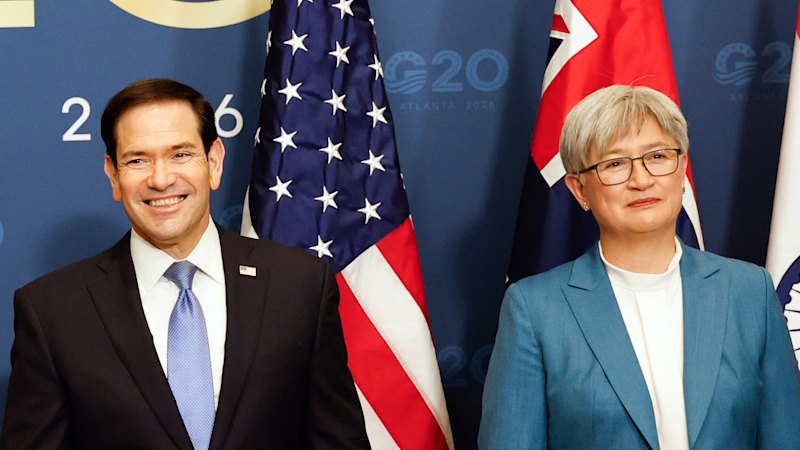
Wong, who attended the G20 foreign ministers' meeting in Atlanta, expressed her government's consistent opposition to further strikes, emphasizing the need for de-escalation and negotiations to resolve the conflict. She highlighted the potential consequences of escalating tensions, stating, "We want to see an end to the escalation, we want to see de-escalation, and we want to see negotiations – and for the conflict to be resolved and for the Strait of Hormuz to be opened."
Global Instability and Protests
The backdrop of this diplomatic exchange is a world grappling with escalating global instability and protests. The G20 summit, held just as Qatar was engaged in talks with Iranian negotiators to prevent a re-escalation of the war, witnessed growing concerns among G20 nations about the Middle East conflict and the ongoing war between Russia and Ukraine. These conflicts are seen as contributing to political and economic disorder, with youth-led protests in Europe serving as a prominent manifestation.
Wong drew a connection between the large-scale unrest and the hardships faced by ordinary people due to higher fuel, grocery, and transport prices, which she attributed to the ongoing wars, particularly the closure of the Strait of Hormuz. She noted, "The pressure on people's cost of living – the cost pressure of the inflation that's in the global economy – is manifesting not just in prices but also in social and economic instability."
Energy Insecurity and Geopolitical Tensions
Energy insecurity has emerged as a significant concern, with Wong emphasizing that it has disproportionately affected those who can least afford it. This issue was raised during one of the G20 sessions, underscoring its global impact.
US Secretary of State Marco Rubio, speaking to reporters in Atlanta, acknowledged Trump's preference for a diplomatic solution but also recognized the challenges of resolving certain global issues peacefully. He stated, "He recognises there are some issues in the world that cannot be solved peacefully, unfortunately. Iran is blowing up ships ... including ships that have energy that's destined for countries represented at that [G20] table."
Australian Perspective and International Relations
Wong's stance reflects Australia's national interest in de-escalation and the reopening of the Strait of Hormuz. When asked about the potential role of the US in creating contemporary problems, Wong emphasized her focus on advocating for Australia's national interest.
The Australian Foreign Minister also attended a meeting of the Quad group of nations (Australia, the US, Japan, and India) in Atlanta. This gathering was marked by a statement from the US hosts referring to "super intelligence" (SI), although Australia, Japan, and India have not joined the US in rebranding artificial intelligence as advocated by Trump.
As the world awaits the outcome of the US midterm elections and the potential for renewed US-Iran tensions, Wong's message underscores the interconnectedness of global issues and the need for diplomatic solutions to prevent further escalation and instability.

